Concrete Leveling
Cost-effective concrete lifting that fixes sunken slabs and eliminates trip hazards without replacement.
Understanding Concrete Settlement and Leveling
Concrete slabs settle and sink when the soil beneath them compacts, erodes, or shifts. This creates uneven surfaces that look bad, create drainage problems, and pose serious tripping hazards. A driveway section that has dropped two inches creates a jarring bump when you drive over it. Sidewalk panels that have settled become dangerous obstacles, especially for elderly people or those with mobility challenges. Front steps that have pulled away from the house allow water to run toward the foundation.
Traditional solutions for sunken concrete involved tearing out the settled sections, fixing the base, and pouring new concrete. This approach costs thousands of dollars, creates a mess, and results in visible patches where new concrete never quite matches the old. Concrete leveling offers a better alternative that raises the existing slab back to its original position without removal or replacement. This process costs 50 to 70 percent less than replacement, completes in hours rather than days, and avoids the disruption of demolition and disposal.
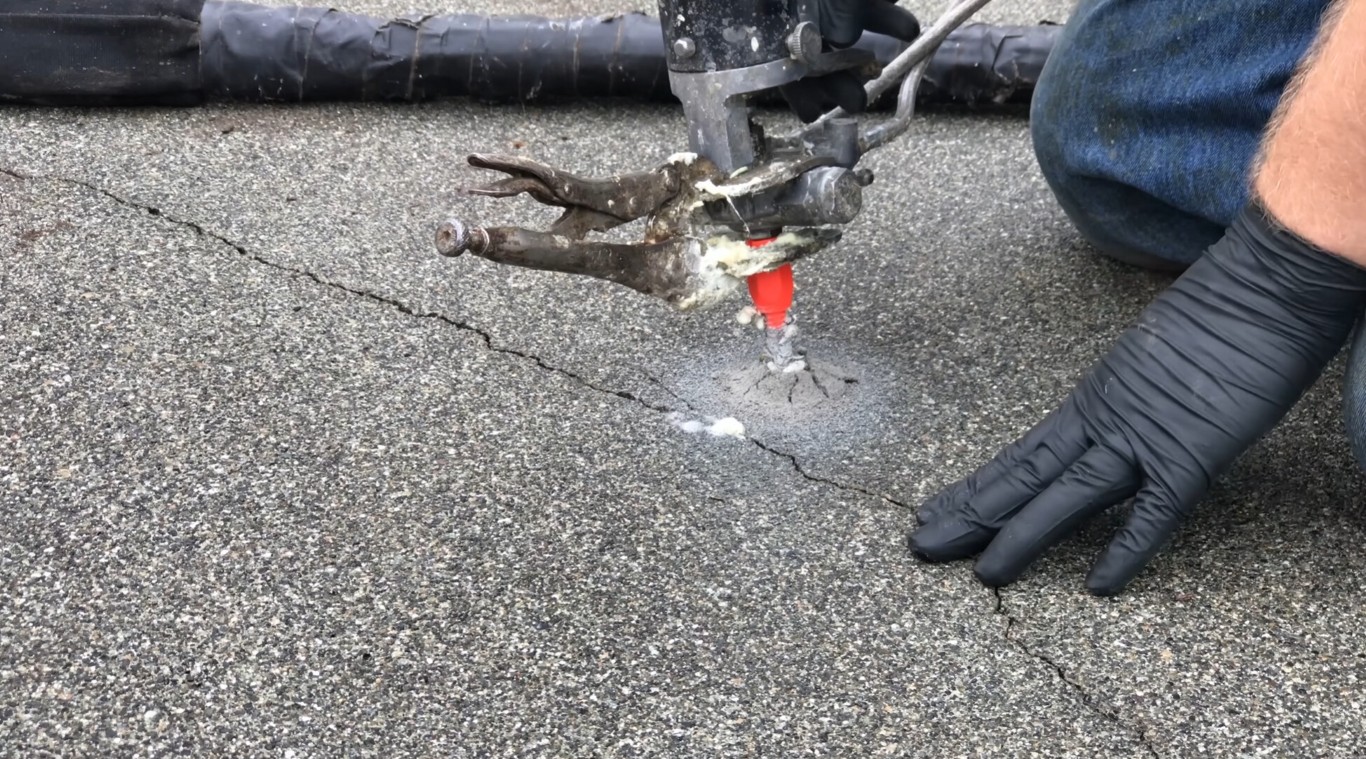
The leveling process works by filling voids beneath the concrete and lifting the slab from underneath. Small holes are drilled through the settled concrete, and material is injected through these holes to fill empty spaces and apply upward pressure that raises the slab. Once the concrete reaches the desired height, the injection stops and the access holes get patched. The entire process is minimally invasive and allows you to use the concrete again almost immediately. For property owners dealing with settled concrete, leveling provides an effective, economical solution.
Concrete Leveling Methods and Materials
Polyurethane Foam Injection
Modern concrete leveling typically uses expanding polyurethane foam injected beneath the slab. This two-part foam mix expands as it cures, filling voids and applying pressure that lifts the concrete. Polyurethane is extremely lightweight, which means it does not add significant load to already compromised soil. The foam also provides some water resistance and maintains its structure over time. The small injection holes are less than an inch in diameter and barely noticeable after patching.
The advantages of polyurethane foam include quick cure time, allowing use within 15 minutes, precise control over lift amount, and minimal weight added to the soil. The foam expands to fill irregular voids and compacts loose soil as it expands. This addresses the underlying cause of settlement while raising the slab. For most residential applications, polyurethane foam provides excellent results and represents the current industry standard for concrete leveling.
Mudjacking and Alternative Methods
Traditional mudjacking, also called slabjacking, uses a mixture of cement, sand, and other materials pumped beneath the slab under pressure. This material fills voids and raises the concrete. While effective, mudjacking requires larger injection holes and adds significant weight that can contribute to future settlement in weak soils. The material also takes longer to cure before the area can be used. We primarily use mudjacking for specific applications where its properties provide advantages over foam.
Each leveling method has appropriate applications. We assess your specific situation including soil conditions, the cause of settlement, and the type of concrete being lifted. Based on this evaluation, we recommend the approach that will provide lasting results. In some cases, we combine leveling with other measures like improving drainage or stabilizing soil to prevent recurring settlement.
Applications and Problem Solving
Concrete leveling solves numerous problems around your property. Understanding what can and cannot be leveled helps you determine if this service addresses your specific issues.
Common Leveling Projects
- Driveway Sections: Settled driveway panels create annoying bumps and water pooling. Leveling restores smooth driving surfaces and proper drainage.
- Sidewalks and Walkways: Uneven sidewalk panels create trip hazards that pose liability risks. Leveling eliminates these hazards and restores safe passage.
- Patio Surfaces: Settled patio sections allow water to pool and create uneven furniture placement. Leveling restores proper slope and usability.
- Garage Floors: Interior slabs that have settled affect drainage and create uneven surfaces. Leveling brings floors back to proper elevation.
- Pool Decks: Settled pool deck sections create trip hazards and drainage problems. Leveling improves safety and directs water away from the pool.
- Foundation Repairs: In some cases, leveling can address minor foundation settlement issues, though major foundation problems need structural engineering solutions.
Concrete leveling works best when the concrete itself is structurally sound. Badly cracked or deteriorated slabs may need replacement rather than leveling. We inspect your concrete and soil conditions to determine if leveling will provide lasting results or if other solutions are more appropriate.
Concrete Leveling Questions
Property owners in Ivins considering concrete leveling often have questions about the process, results, and longevity. Here are answers to the most common concerns.