
Concrete Slab & Foundation Work
Solid foundation work and precision slab installation for residential and commercial projects throughout Ivins.
Understanding Concrete Slabs and Foundations
The foundation is literally what holds your building up, making it one of the most critical components of any construction project. Whether you are building a new home, adding a garage, constructing a shed, or developing a commercial property, the quality of your foundation work determines how well the structure performs over its lifetime. A properly installed concrete foundation distributes the weight of the building evenly across the ground, prevents settling that causes structural damage, and protects against moisture intrusion that can compromise the building.
In Southern Utah, our soil conditions and climate create specific challenges for foundation work. Some areas have expansive clay soils that swell when wet and shrink when dry, putting stress on foundations. Other locations have sandy or rocky soil that requires different preparation approaches. Our experience working throughout Ivins and surrounding areas means we understand these local conditions and know how to adapt our methods to ensure your foundation performs as it should for decades.
Concrete slabs serve various purposes beyond foundations. You might need a slab for a garage floor, workshop, storage building, or as a base for equipment like air conditioning units or generators. Each application has different requirements for thickness, reinforcement, and finishing. We match the slab specifications to your intended use so you get a surface that handles the loads and conditions it will face without overbuilding and wasting money on unnecessary thickness or reinforcement.
Types of Concrete Foundations We Install
Slab-on-Grade Foundations
Slab-on-grade foundations are common in our region because they work well with our climate and offer cost-effective construction. This type of foundation consists of a single layer of concrete poured directly on prepared ground. The slab serves as both the foundation and the floor of the building. Edges are typically thickened to provide extra support for load-bearing walls. This design works well for single-story homes, garages, and many commercial buildings.
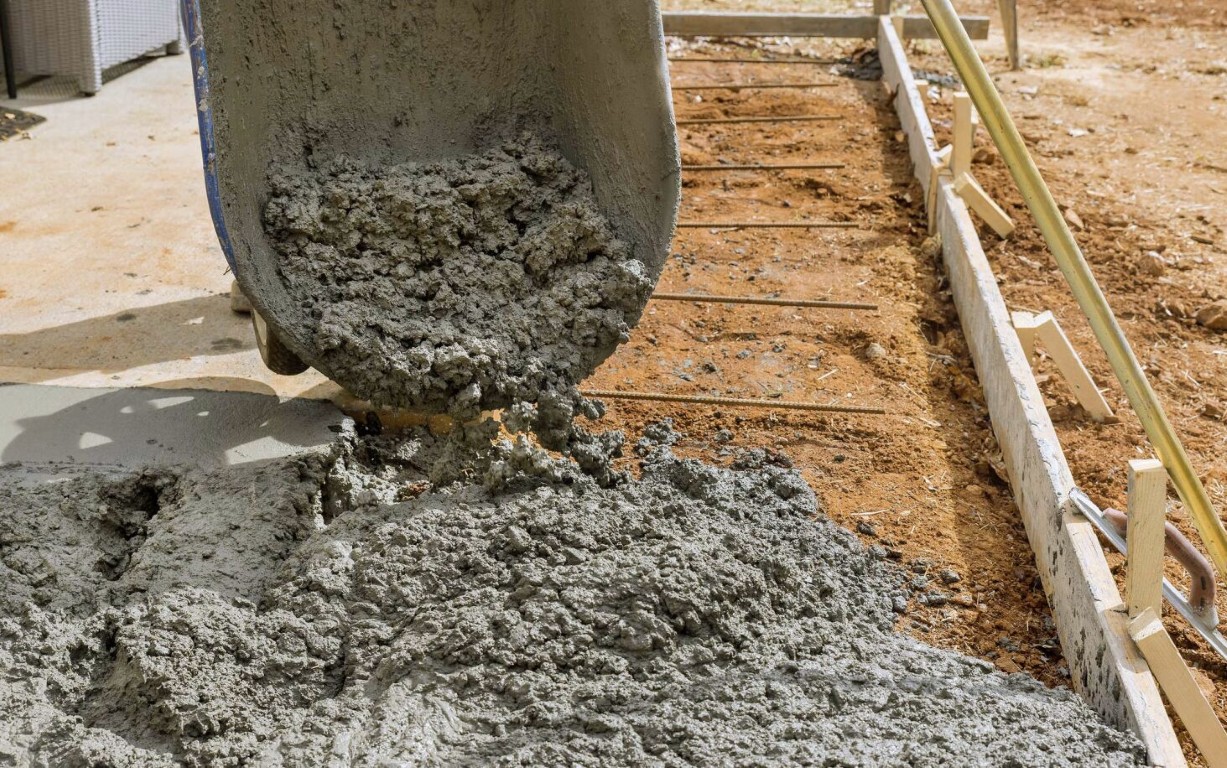
The process begins with careful site preparation and grading. We excavate to the proper depth, install a compacted gravel base for drainage and stability, and place vapor barriers to prevent moisture from wicking up through the concrete. Reinforcement like rebar or wire mesh is positioned within the slab to control cracking. Plumbing and electrical conduits are installed before the pour since they will be embedded within or beneath the slab. The concrete is then placed, leveled, and finished in one continuous operation for maximum strength.
Stem Wall Foundations
Stem wall foundations combine a perimeter footing and wall with a concrete slab floor. This design elevates the building slightly above grade and works well for sloped lots or areas where you want a crawl space for utilities. The stem wall creates a solid connection between the footing below frost depth and the above-grade structure. This foundation type provides excellent structural support and makes it easier to route plumbing and HVAC systems.
Installation involves excavating trenches for the footings, forming and pouring the footings first, then building forms for the stem walls. After the walls cure, we backfill around them, prepare the interior area with gravel and vapor barriers, and pour the slab. This multi-step process takes longer than a simple slab-on-grade but provides benefits that make it worthwhile for many projects, especially on challenging sites or where building codes require deeper footings.
Commercial and Industrial Slabs
Commercial projects often require heavier-duty slabs designed to support significant loads from equipment, inventory, or vehicle traffic. We install industrial-grade slabs with increased thickness, upgraded reinforcement, and specialized finishes to meet the demands of warehouses, retail spaces, manufacturing facilities, and other commercial applications. These slabs may include features like control joints on specific spacing, hardened surfaces for durability, or floor drains integrated into the slope of the slab.
Critical Steps for Quality Foundation Work
Foundation work demands precision at every step. Shortcuts or mistakes during any phase can lead to expensive problems down the road. Here is how we ensure quality results on every project.
Essential Foundation Components
- Soil Testing and Preparation: We assess soil conditions to determine if special measures are needed. Problem soils may require removal and replacement, chemical stabilization, or engineered solutions.
- Proper Excavation Depth: Footings must extend below frost depth to prevent heaving. The depth varies by location and building codes. We ensure excavations meet or exceed requirements.
- Compacted Base Material: A well-compacted gravel base provides drainage and prevents settling. We use professional compaction equipment and check density to meet specifications.
- Reinforcement Placement: Steel rebar or mesh must be positioned at the correct height within the concrete for maximum effectiveness. Improper placement wastes the benefit of reinforcement.
- Vapor Barriers: Plastic sheeting beneath slabs prevents ground moisture from migrating upward into the building. This is especially important for living spaces or areas with flooring.
- Quality Concrete Mix: We use the appropriate concrete mix design for your application and climate. The mix must have the right strength, workability, and air content.
Each of these elements must be executed correctly, and in the proper sequence, to create a foundation that will support your structure reliably. Our crews understand these requirements and have the experience to handle variations and challenges that arise during concrete installation work.
Foundation and Slab Questions
Foundation work raises important questions about process, timing, and costs. Here are answers to what we hear most often from property owners planning concrete projects in our area.